Can you still get a vacation rental permit in South Lake Tahoe in 2026?
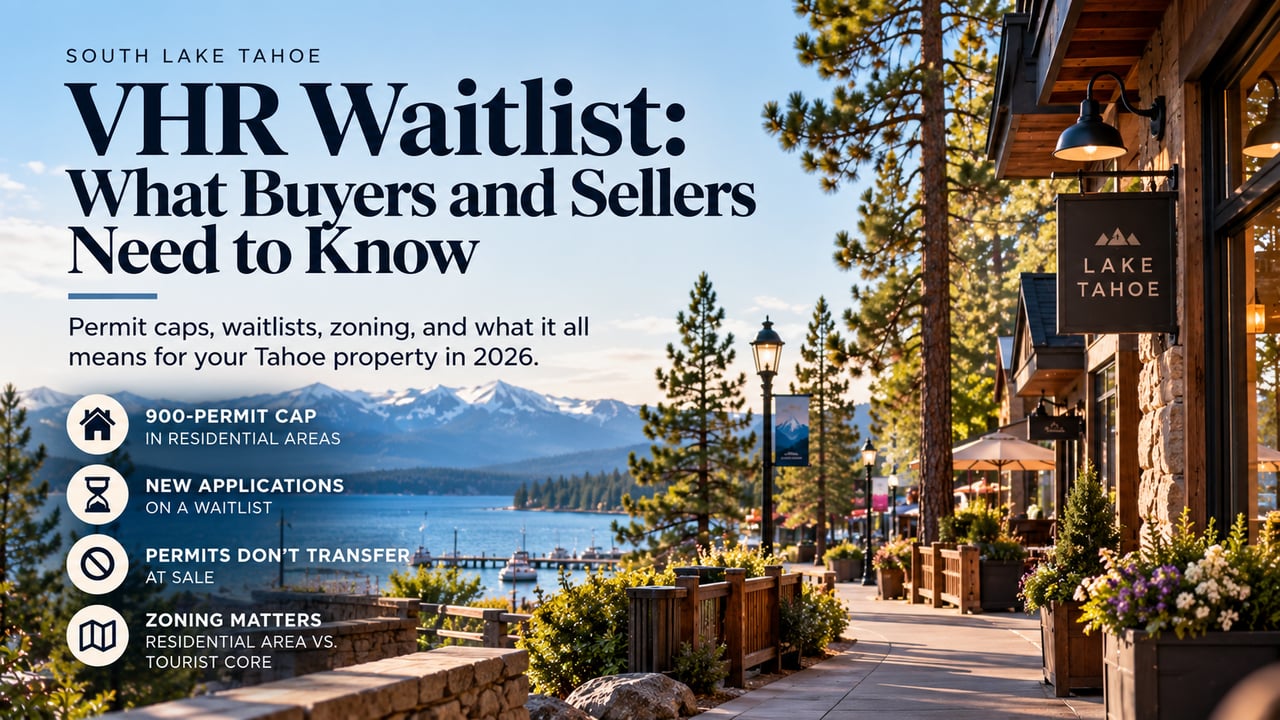
Inside South Lake Tahoe city limits, the answer depends on zoning. Residential areas are capped at 900 vacation home rental (VHR) permits, and the city began placing new residential applications on a waitlist in August 2026. The Tourist Core and commercial zones aren't capped. Because city and El Dorado County permits don't transfer to a new owner, anyone buying a South Lake Tahoe home with rental plans should confirm zoning and waitlist status before writing an offer.
By Ryan Smith | October 12, 2026
Permit counts, caps, and waitlist status change constantly. Every number in this post was accurate to the best of my knowledge at the time of writing and should be verified with the city or county before you make a decision.
If you're buying in South Lake Tahoe with any plan to rent the house out, or selling a home that currently holds a VHR permit, the rules changed under your feet this year. And they changed again in late summer.
This is one of the most common questions I'm getting from buyers and sellers right now: "Can I still rent it out?" The honest answer is more nuanced than yes or no, and getting it wrong can swing the math on a $900K to $2M purchase by tens of thousands of dollars a year.
Here's how it works today, what it means on each side of the deal, and the checks I run before a client writes an offer or sets a list price.
How we got here: from Measure T to a 900-permit cap
Quick version of a long story:
2018: Voters passed Measure T, which phased out VHRs in most residential neighborhoods inside city limits.
March 2025: A judge struck down Measure T, finding its permanent-resident exception unconstitutional.
June 2025: The city reopened residential neighborhoods to VHRs with a 150-foot buffer between rentals.
March 24, 2026: City Council replaced the buffer with a cap of 900 permits in residential areas. That ordinance took effect April 23, 2026.
August 2026: As permits approached the cap, the city began placing new residential applications on a waitlist.
The amended ordinance also added a minimum renter age of 25, opened the door for attached condos to hold permits (unless the HOA prohibits short-term rentals), and required residential-area listings to carry "family-friendly" language on booking platforms.
If you read an older article that says rentals are "banned" in South Lake Tahoe neighborhoods, it's describing Measure T. That's no longer the rule.
Residential area vs. Tourist Core: the check that matters most
Almost everything turns on one question: is the address in a "residential area" under the ordinance?
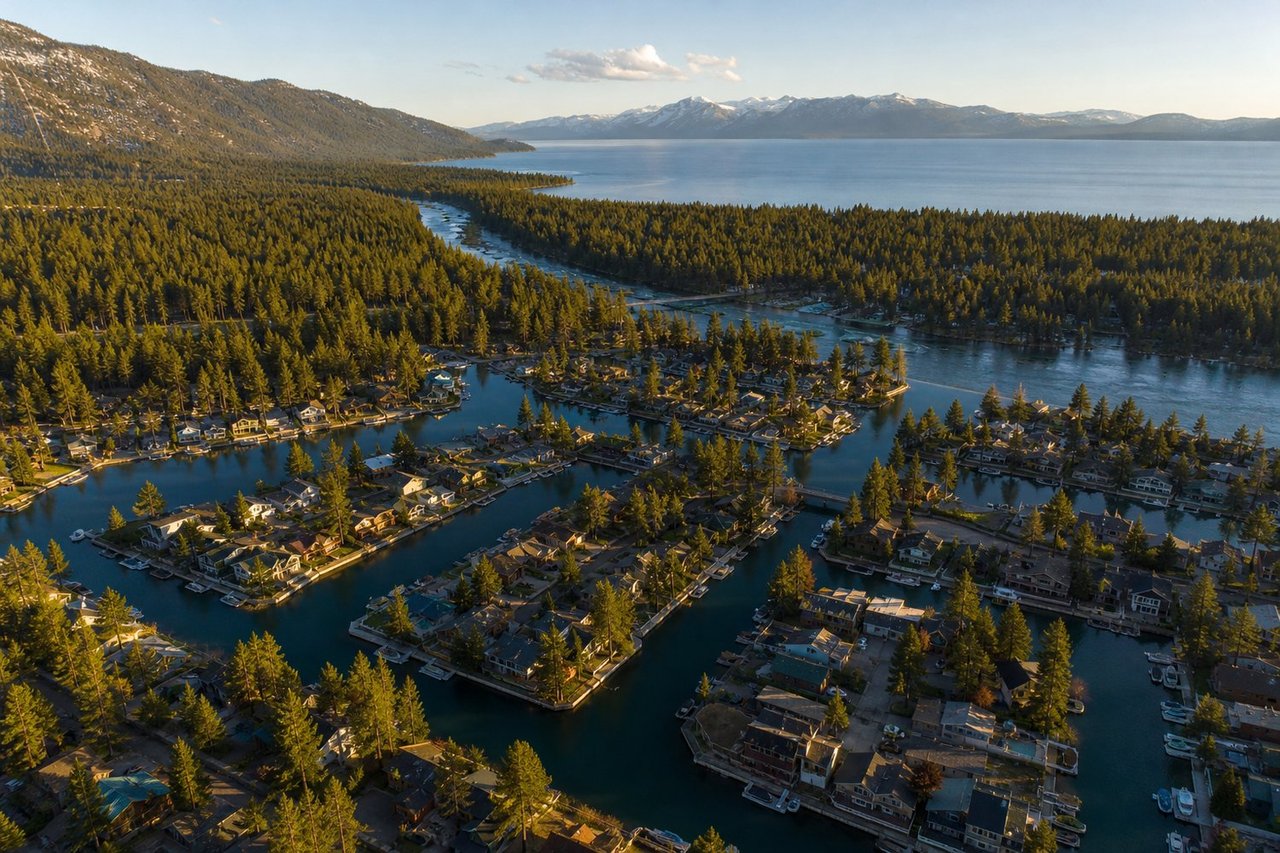
Residential areas (most of Al Tahoe, Sierra Tract, Gardner Mountain, Tahoe Keys, and the neighborhoods in between) are subject to the 900 cap, the waitlist, and stricter operating rules: a designated property manager, noise and outdoor video monitoring, 24/7 local contact, and an in-person response requirement.
The Tourist Core and certain commercial or community plan areas are not capped and have lighter operating standards.
The boundaries don't always follow the lines you'd expect. Two homes a few blocks apart can land on opposite sides. The city publishes a zoning lookup map and an issued-permit dashboard, and those are the first two things I pull for any client who asks about rental potential.
Outside city limits: Meyers and unincorporated El Dorado County
Meyers, Christmas Valley, and the unincorporated South and West Shore follow El Dorado County's program, not the city's. As of the county's spring 2026 FAQ, the Tahoe Basin has its own 900-permit cap plus a 500-foot buffer between active rentals. If a parcel sits inside someone else's buffer, the owner can only join the waitlist. I wrote about how that buffer plays out in a specific neighborhood in the 500-foot rule that decides your rental math in Cascade Properties.
Across the state line: Stateline and Zephyr Cove
Douglas County, Nevada runs a separate program for the Tahoe Township with a 600-permit cap plus neighborhood-level density limits, and it has operated a waitlist as neighborhoods and the overall cap fill up. Recent public figures put issued permits in the mid-500s, but that number moves and needs to be checked against the county's current waitlist page.
If you're buying: don't pay for a permit you won't get
This is the part that catches buyers off guard.
A VHR permit does not transfer to you when you buy the house. Not in the city, and not in unincorporated El Dorado County. In the city, a change of ownership requires a new application. In a residential area, that means joining the waitlist. The only exception the city clarified is a transfer into the owner's own family trust for estate planning, which doesn't help a buyer.
So when a listing says "currently permitted VHR" or shows strong rental history, that income belongs to the seller's ownership, not yours.
Here's the checklist I walk buyers through before we write an offer:
Confirm the jurisdiction. City of South Lake Tahoe, unincorporated El Dorado County, or Douglas County, NV. Each has different rules.
Confirm the zone. In the city, check whether the address is in a residential area or the Tourist Core.
Check the buffer (county) or density limits (Douglas). A parcel inside a 500-foot buffer or a full Douglas neighborhood starts on a waitlist.
Underwrite without rental income. If the numbers only work with VHR income, the house is a speculation, not an investment. Your lender will likely see it the same way.
Count bedrooms and paved parking. In the city, occupancy is the lower of the bedroom-based and parking-based limits, and it drives both your fee tier and your realistic nightly rate.
Condo? Read the CC&Rs. Attached condos can now qualify in the city unless the HOA has prohibited short-term rentals. Multifamily units can't be VHRs at all.
Write the contingency correctly. If rental potential matters to you, your offer should give you time and a clear exit to verify it during your contingency period.
What this means for pricing
For buyers, the waitlist changes what a fair price looks like. A home in a residential area of Sierra Tract or Al Tahoe should generally be valued on its merits as a home: location, condition, lot, lake proximity, and comparable sales. Not on a rental income stream you can't count on. If you're shopping the lower end of the market, my post on finding value in Sierra Tract fixers and cabins covers how I think about value there.
On the flip side, Tourist Core properties and homes in uncapped zones may command a premium for exactly the opposite reason. That premium should be backed by verified zoning, not a listing remark.
If you're selling: price the home, not the permit
If your home currently holds a VHR permit, it's an asset to you. It is not something you can hand to the buyer.
That has a few practical consequences:
Don't price on rental income. Buyers' agents who know this market will discount any income-based pitch, and appraisers will value the property on comparable sales, not on your booking history.
Disclose clearly. State the permit status accurately, note that it does not transfer, and point buyers to the city or county for their own verification. Clear disclosure protects you and keeps an escrow from falling apart late.
Know your buyer pool. In a residential-area home, your strongest buyers are likely second-home owners and full-time residents, not investors running pro formas. Your marketing should speak to them: the lifestyle, the location, and the condition of the home.
Keep your permit active while listed (if you're renting). Continuing to operate under your permit while the home is on the market can help carrying costs. Just make sure showings and guest stays don't collide, and that the home shows well between bookings.
If your home is in Al Tahoe or close to the lake, I've laid out strategies for selling an Al Tahoe home near the lake that apply directly here.
Should you sell now or wait?
Some sellers are asking whether to wait and see if the cap changes. I can't predict what City Council will do next. The rules have changed four times since April 2025, and they could change again. What I can do is show you how comparable homes are selling today, with and without permits, so you're deciding on real numbers rather than hope.
This is exactly the kind of question I walk my clients through before we list.
Frequently Asked Questions
Does a South Lake Tahoe VHR permit transfer to the buyer?
No. In the City of South Lake Tahoe, a change of ownership requires a new VHR application, and in residential areas that means joining the waitlist while it's open. Unincorporated El Dorado County permits don't transfer to new owners either. Always verify current rules with the city or county before closing.
Is there a VHR permit cap in South Lake Tahoe?
Yes. Since April 23, 2026, the city has capped VHR permits in residential areas at 900, and it began waitlisting new residential applications in August 2026. The Tourist Core and commercial zones aren't subject to that cap. Permit counts change frequently, so check the city's VHR page for current status.
Can I rent out my house in Meyers?
Meyers is in unincorporated El Dorado County, which has its own 900-permit Tahoe Basin cap and a 500-foot buffer between active rentals. If your parcel is within 500 feet of an existing permitted VHR, you can only join the county waitlist. The county's buffer map shows where active rentals and buffers are.
Are vacation rentals allowed in Stateline and Zephyr Cove?
Yes, with a Douglas County permit. The Tahoe Township has a 600-permit cap plus neighborhood density limits, and new applications in constrained neighborhoods or after the cap is reached go on a waitlist. Confirm current availability with Douglas County before you buy.
Should I buy a South Lake Tahoe home planning to use it as a vacation rental?
Only if the numbers work without rental income or the property is in an uncapped zone where you've verified eligibility. Treat rental income in a residential area as a possible upside, not a given, and build your purchase contract to give you time to confirm zoning and permit status.
The bottom line
The VHR waitlist doesn't make South Lake Tahoe a bad place to buy or sell. It makes it a place where the details matter more than ever. Buyers need to verify zoning and underwrite without assumed rental income. Sellers need to price the home, not the permit.
If you're thinking through this for your own situation, I'm happy to pull the zoning, permit, and comparable sales data for a specific address and walk you through the numbers. Call or text me anytime at (530) 545-0045.
About Ryan
I'm a REALTOR® with Compass | Lake Tahoe, based in South Lake Tahoe. I works with buyers, sellers, and investors throughout South Lake Tahoe, as well as the surrounding California and Nevada sides of Lake Tahoe, dual-licensed in both states (CA DRE #02095506, NV #0188892). My partnership Salmon + Smith ranks as a top agents in South Lake Tahoe, covering over $1,000,000,000 in total combined sales. My focus ranges from single-family homes and investment properties, to new construction and luxury properties.
For more content check out our partner site SalmonSmith.com